
Professional Yacht Polishing Guide: Ceramic Coating & Hull Protection
7seas7works


Why Professional Yacht Polishing Matters
Whether it's a luxury motor yacht, a sleek catamaran, or a classic sailing vessel, the exterior finish is constantly under attack from harsh Mediterranean elements. Salt spray corrodes protective coatings, UV rays oxidize gel coat, and environmental contaminants create a dull, weathered appearance that compromises both aesthetics and protection.
Many yacht owners don't realize that professional polishing isn't just about making your yacht look beautiful—it's about preserving its value, protecting the hull from damage, and extending the life of your gel coat by years. When you neglect polishing, minor oxidation becomes major corrosion, small scratches become deep damage, and the cost of restoration skyrockets.
At 7seas7works in Tivat, we've seen firsthand the difference professional yacht polishing makes. Yachts that receive regular professional care maintain their shine, hold their resale value, and suffer fewer maintenance issues down the line. In this comprehensive guide, we'll walk you through everything you need to know about professional yacht polishing, why it matters for your vessel, and when to schedule your next service.
The Complete Yacht Polishing Process Step-by-Step
Professional yacht polishing isn't something you can rush. It requires expertise, specialized equipment, and attention to detail. Here's exactly how we approach yacht polishing at 7seas7works:
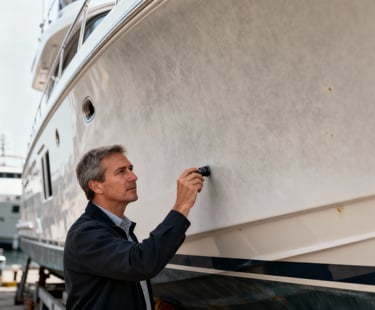
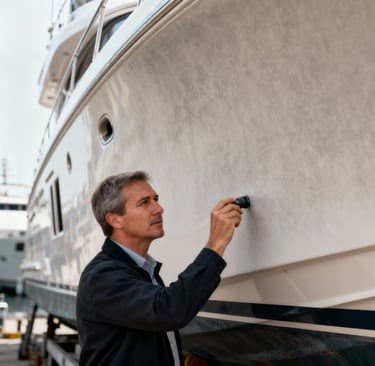
Step 1: Surface Inspection and Assessment
Before we touch your yacht with any polishing compound, we conduct a thorough inspection of the hull, deck, and all exterior surfaces. We're looking for:
Oxidation severity (chalky, white coating on gel coat)
Water spots and salt deposits
Scratches, swirl marks, and fine imperfections
Existing gel coat condition and thickness
Previous coating history
This assessment determines which polishing method we'll use and how intensive the process needs to be. Some yachts need light maintenance polishing, while others with heavy oxidation require a more aggressive multi-stage process.
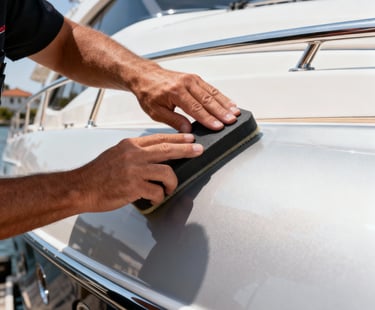
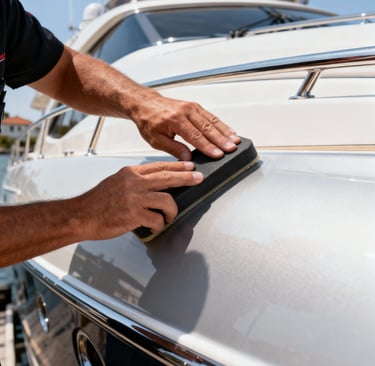
Step 2: Clay Bar Treatment
Before polishing, we use a clay bar to remove embedded contaminants from the gel coat surface. This step is crucial and often overlooked by amateur cleaners. The clay bar pulls out:
Salt deposits that won't wash away with water
Industrial fallout from the atmosphere
Oxidized gel coat particles
Bird droppings and organic residue
The clay bar leaves the surface smooth and clean, ready for polishing. Without this step, polishing compound can't make proper contact with the gel coat, and results are severely compromised.
Step 3: Machine Polishing (Primary Stage)
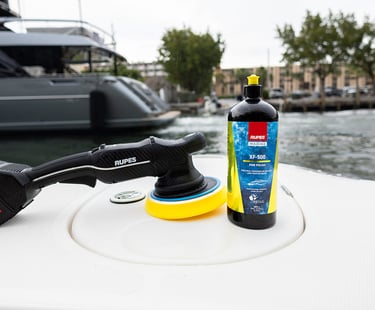
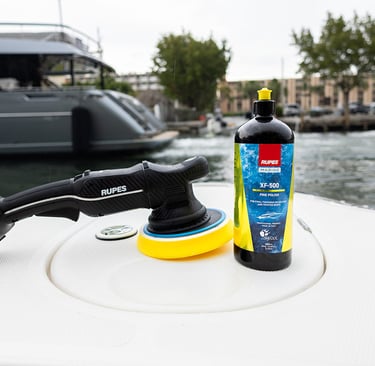
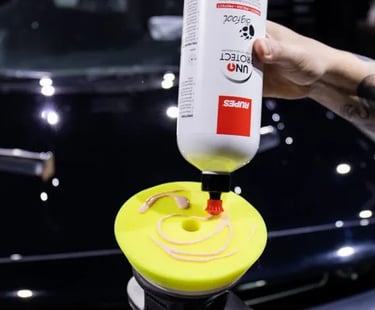
Using professional-grade orbital polishers and multi-stage polishing compounds, we begin removing oxidation and restoring the gel coat's shine. This is where the real transformation happens:
We use cutting compound (coarser grit) to remove oxidation and restore clarity
The polisher is held at precise angles to avoid creating swirl marks
We work in small sections, overlapping passes for even coverage
Speed and pressure are carefully controlled to avoid gel coat damage
This stage typically takes the longest and requires the most expertise. Improper technique here can cause permanent damage to your yacht's finish.
Step 4: Oxidation Removal and Refinement
After the initial cutting, we use a finer polishing compound to remove any remaining scratches or haze left by the cutting compound. This step:
Eliminates swirl marks from the initial polishing
Further refines the gel coat surface
Ensures an even, consistent finish across the entire hull
Prepares the surface for protection
Step 5: Final Protection Application
Once polishing is complete, we apply a protective layer. Depending on your needs, this might be:
Traditional marine wax: Provides shine and basic protection (3-6 months)
Ceramic coating: Advanced nano-ceramic protection (12-24 months)
Combination: Wax base with ceramic topcoat for maximum durability
We recommend ceramic coating for most yachts, as it provides superior protection, better water beading, and longer-lasting results.
Step 6: Quality Inspection
Before we consider the job complete, we perform a thorough quality inspection:
Visual check under natural and artificial light
Feel test to ensure smooth, even finish
Water beading test to verify protective coating adherence
Documentation with before/after photos
Your yacht should look like new—or better. If we're not 100% satisfied, we'll re-polish any areas until it's perfect.
Ceramic Coating vs Traditional Wax: Which is Better?
This is the question we hear most often from yacht owners. Both options have their place, but they're fundamentally different products with different benefits and drawbacks.
Traditional Marine Wax
How it works: Carnauba wax creates a thin protective layer on top of the gel coat. It provides immediate shine and basic UV protection.
Advantages:
✅ Lower cost
✅ Familiar to most yacht owners
✅ Easy touch-ups between professional services
✅ Doesn't require professional equipment to apply
Disadvantages:
❌ Short lifespan (3-6 months in Mediterranean climate)
❌ Requires frequent re-application
❌ Doesn't protect against all contaminants
❌ Water beading diminishes quickly
❌ More expensive over time (multiple applications yearly)
Best for: Budget-conscious owners who don't mind frequent maintenance
Ceramic Coating
How it works: Nano-ceramic particles bond to the gel coat at a molecular level, creating an ultra-hard, protective barrier that's practically permanent until it naturally wears away.
Advantages:
✅ Long lifespan (12-24 months, sometimes longer)
✅ Superior UV protection
✅ Excellent water beading (water rolls off effortlessly)
✅ Protects against salt spray and oxidation
✅ Lower maintenance requirement
✅ More cost-effective over 2-3 years
✅ Improves resale value perception
Disadvantages:
❌ Higher initial cost
❌ Requires professional application
❌ Can't be "touched up" easily—requires full reapplication
❌ Takes 24-48 hours to cure before yacht can be used
Best for: Serious yacht owners who want maximum protection and value their time
Seasonal Polishing Schedule for Mediterranean Yachts
The Mediterranean climate is brutal on yacht finishes. Salt spray, intense UV radiation, and temperature fluctuations create a perfect storm for oxidation and damage. Here's the professional maintenance schedule we recommend:
Spring (March-May)
Goal: Prepare your yacht for the busy charter/cruising season
Light polish + ceramic top-up: starting 800€
Timing: Mid-March for optimal results
Why: Removes winter oxidation and salt buildup, applies protective coating before intense summer sun
Summer (June-August)
Goal: Maintain protective coating and address any damage
Maintenance wash + inspection: 150-300€ (no polishing needed if coating is still strong)
Spot repairs if needed: Quote-based
Timing: Once mid-summer, if yacht is in heavy use
Fall (September-November)
Goal: Prepare for winter and storm season
Full polish + wax or ceramic: starting 1200€
Timing: October (before winter weather intensifies)
Why: Protects gel coat from winter rain, salt spray, and UV damage during shoulder season
Winter (December-February)
Goal: Protect stored yacht from damage
Pre-storage preparation: starting 500€
Timing: Early December
Why: Applies protective layer before storage, prevents oxidation during idle months
Summary: The Year at a Glance
Spring: Intensive polish + ceramic (preparation phase)
Summer: Light maintenance (protection phase)
Fall: Full polish + coating (winterization phase)
Winter: Storage prep (preservation phase)
This schedule keeps your yacht looking pristine year-round while protecting your investment from Mediterranean weather extremes.
Common Yacht Polishing Mistakes to Avoid
Over 10+ years in the marine industry, we've seen countless yacht owners damage their vessels trying to DIY or hiring inexperienced team. Here are the biggest mistakes:
❌ Mistake #1: Using Car Products on Your Yacht
"It's just a bigger version of a car, right?" Wrong. Yacht gel coat is more delicate than automotive paint, and marine environments are far harsher. Car wax and polishes don't provide adequate salt spray protection. Always use marine-grade products specifically formulated for gel coat and saltwater exposure.
❌ Mistake #2: Power Washing Before Polishing
High-pressure water blasts can damage gel coat, especially if it's already oxidized or thin from age. We use low-pressure rinses only, and never before polishing. Power washing should only happen after polishing, if at all.
❌ Mistake #3: Skipping the Clay Bar Treatment
We've seen "polished" yachts that look good from 10 feet away but feel rough to the touch because contaminants are embedded in the gel coat. Professional polishing includes clay bar treatment. Skipping this step wastes money on polishing because the compound can't make proper contact.
❌ Mistake #4: Over-Polishing
Aggressive DIY owners sometimes apply polishing compound multiple times thinking it will create more shine. Excessive polishing actually thins the gel coat, exposes the fiberglass beneath, and causes permanent damage. Professional polishers use the minimum pressure needed to achieve results—never more.
❌ Mistake #5: Ignoring Water Spots
"I'll just clean it when I get back to port." Water spots left to dry on your yacht's finish become mineral deposits that oxidize into permanent stains. Always rinse and dry your yacht immediately after rain or salt water exposure. Left untreated, water spots require aggressive polishing to remove.
❌ Mistake #6: Using Old, Dried-Out Products
Polishing compounds degrade over time. An old tin of wax or polish sitting in your cabin isn't going to work. Always use fresh products, and let them come to room temperature before applying—temperature affects their effectiveness.
❌ Mistake #7: Polishing Under Direct Sunlight
The sun warms the gel coat surface, causing polishing compounds to dry too quickly and unevenly. This creates streaking and incomplete coverage. Always polish in shade, ideally early morning or late afternoon when surfaces are cool.
Before & After Case Studies
Case Study #1: The Neglected Azimut 75
Situation: A 20-year-old Azimut motor yacht had been stored for two years with minimal maintenance. The hull was severely oxidized—chalky white coating covered most of the blue gel coat. The owner had just returned to active cruising and wanted the yacht to look presentable.
Our approach: Intensive two-stage polishing with ceramic coating
Results:
Oxidation completely removed, original gel coat color restored
Swirl marks and light scratches eliminated
Ceramic coating applied for long-term protection
Transformation: From dull, neglected-looking to showroom-quality condition
Maintenance: Owner now follows seasonal schedule, yacht looks pristine year-round
Case Study #2: The New Catamaran Owner
Situation: A Fountaine Pajot catamaran owner purchased a new-to-him boat (5 years old) and wanted to maintain it properly. The yacht had never received professional polishing—only occasional washing.
Our approach: Light polish (maintenance-level) + ceramic coating
Results:
Removed fine oxidation and light swirl marks
Enhanced gel coat clarity and depth
Applied 18-month ceramic protection
Cost: $650 total (excellent value for the transformation)
Maintenance: One ceramic reapplication per year keeps the yacht in perfect condition
Case Study #3: The Charter Boat Comeback
Situation: A charter company's 10-boat fleet had suffered from aggressive guest use, minimal polishing, and heavy salt exposure. Yachts looked tired and worn—not great for attracting high-end renters.
Our approach: Full fleet maintenance program with quarterly light polishing
Results:
All boats restored to excellent condition
Charter bookings increased (better photos, yacht appearance matters)
Fleet now maintains consistent premium appearance
Maintenance costs decreased (prevented major oxidation damage)
FAQ: Your Yacht Polishing Questions Answered
Q: How often should I have my yacht professionally polished?
A: For yachts in regular use in the Mediterranean, we recommend a full polish + ceramic coating every 12-18 months. Light maintenance polishing can happen more frequently (annually or semi-annually) if your yacht is actively used.
Q: Can I polish my yacht myself?
A: Technically yes, but professional results require specialized equipment ($2,000+ in polishers and compounds) and expertise. Most DIY attempts result in uneven coverage, swirl marks, or gel coat damage. For a 50-foot yacht, the labor cost typically exceeds $1,500 anyway. We recommend leaving it to professionals.
Q: Does polishing remove deep scratches?
A: Light scratches (swirl marks) can be removed or greatly minimized through aggressive polishing. Deep gouges that go through gel coat to fiberglass require gel coat repair first, then polishing. If you can feel a scratch with your fingernail, it's likely too deep for polishing alone.
Q: Is ceramic coating worth the extra cost?
A: Yes, absolutely. Over a 2-3 year period, ceramic coating is more cost-effective than traditional wax, provides superior protection, and requires less maintenance. Plus, ceramic-coated yachts command higher resale prices.
Q: Can I wax over ceramic coating?
A: Not recommended. Ceramic coating is designed to be a standalone protective layer. Applying wax over it creates an unnecessary layer that can trap moisture and degrade both products. Stick with ceramic coating throughout its lifespan.
Q: How long does the polishing process take?
A: For a 40-50 foot yacht, plan on 2-4 days depending on oxidation severity, whether we're doing ceramic coating, and current weather. Ceramic coating adds 24-48 hours curing time before the yacht can be used.
Q: What's the difference between oxidation and staining?
A: Oxidation is a chemical reaction where the gel coat degrades from UV exposure and salt—it creates a chalky, dull appearance. Staining is surface discoloration from contaminants like water spots or bird droppings. Both are removed through polishing, but oxidation removal is more intensive.
Q: My yacht sits at the dock all year. Does it still need polishing?
A: Yes, even more so! Stationary yachts exposed to constant sun, salt spray, and weather need polishing every 9-12 months. The UV damage compounds over time.
Q: Can polishing fix fading of colored gel coat?
A: Polishing can restore clarity and bring back some brightness to faded colors, but it can't change the actual color. Severe fading typically means the gel coat is near the end of its life and may eventually require re-gelcoating.
Q: Is there a best time of year to polish my yacht?
A: Spring (March-May) and Fall (September-October) are ideal. Avoid peak summer heat when curing times are slow, and avoid winter when cold temperatures affect product performance.
Book Your Professional Yacht Polishing Service Today
Your yacht deserves expert care from professionals who understand marine finishes, Mediterranean conditions, and the specific challenges of yacht maintenance. At 7seas7works, we've been protecting and restoring yachts in Tivat since 2025, and we take pride in delivering showroom-quality results every single time.
Don't let oxidation, water spots, and salt damage ruin your investment.
Whether your yacht needs intensive restoration polishing or routine maintenance, we have the expertise and equipment to deliver exceptional results. Our ceramic coating applications provide long-lasting protection that keeps your yacht looking brilliant year after year.
Ready to Transform Your Yacht?
Contact 7seas7works today for a free consultation and quote:
📞 Phone: +382 68 700 711
📧 Email: info@7seas7works.me
📍 Location: Tivat, Montenegro
🌐 Website: https://www.7seas7works.me
Or book directly from our website for fastest response times.
We service yachts at Porto Montenegro and throughout Boka Bay. Whether you're preparing for charter season, protecting your off-season vessel, or just want your yacht to look its absolute best, we're here to help.
Your yacht will thank you. Your guests will notice the difference. Your investment will maintain its value.
7seas7works: Premium Yacht Detailing & Service


Get in touch with our team today.
Contact us
© 2025. All rights reserved.